
A destination event in Bali rarely stays contained to one venue or one day. Guests fly in from different countries. Accommodation spans several properties. A single program can move between a beach ceremony, a jungle dinner, and a cultural excursion within the same week. That level of complexity is exactly where a Destination Management Company in Bali becomes essential. It is not an extra layer of cost. It is the one team that sees the whole journey at once.
What Is a Destination Management Company in Bali?
A Destination Management Company in Bali works as a local partner for the entire destination experience, not just the event itself. An event planner usually focuses on a specific program or ceremony. A local DMC connects accommodation, transportation, activities, and local suppliers into one coordinated journey. Groups exploring Bali DMC services often start here, with a clear picture of what a destination partner actually does day to day. That distinction matters most once a group’s needs stretch beyond a single venue.
Why Destination Events in Bali Involve More Than One Venue
Most international groups underestimate how many moving parts a Bali event actually involves. This is the layer that destination event planning in Bali most often depends on. A single program often needs to account for:
- International guests arriving across different flights and time zones
- Accommodation spread across multiple properties or resort clusters
- Airport transfers and ground transportation between locations
- Several venue and activity locations across one trip
- A multi-day itinerary that blends events with free time
- Local suppliers for catering, décor, and entertainment
- Cultural expectations tied to specific ceremonies or traditions
- Weather and transportation contingencies for outdoor activities
Each of these pieces can be managed on its own. Keeping them aligned across several days is a different challenge. This is where most in-house teams start to struggle.
How a DMC Connects Every Part of the Destination Experience
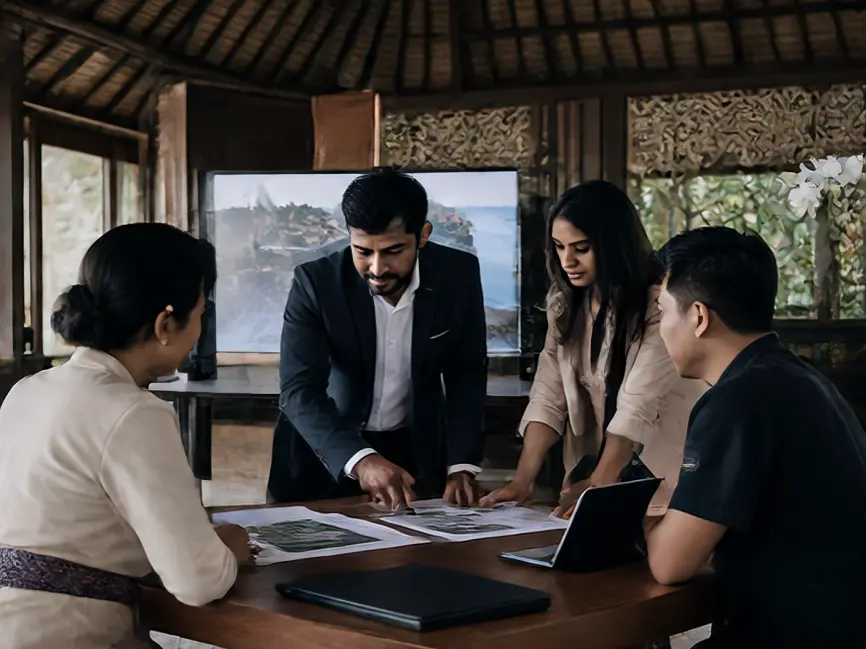
A local partner earns its value in one specific way. It ties every one of these components together instead of treating them as separate bookings.
Local Expertise for Destination-Wide Decisions
Local expertise here means more than knowing good venues. It means understanding which areas of Bali suit which type of group. It also means knowing how far guests should realistically travel between activities, and which suppliers can deliver consistently across a multi-day program. These are destination-wide decisions, not choices tied to a single event day.
Coordinating the Entire Destination Experience
Event coordination focuses on making the event itself run smoothly. A DMC connects that execution with accommodation, transportation, activities, and the wider guest experience. Learn more about event coordination services in Bali to understand how on-ground event support works. A DMC builds on that same execution layer. It then extends the same coordination across every property, transfer, and activity a group touches during their stay.
Tailored Solutions for Multi-Day Programs
No two groups arrive with the same itinerary, guest profile, or cultural requirements. A tailored program accounts for group size and pacing between activities. It also builds in any specific rituals or traditions the schedule needs to support. This kind of planning matters most for multi-day celebrations. A single missed detail on day one can affect every day that follows.
Enhancing the Guest Journey in Bali

This is often where a destination management partner creates the clearest difference. Beyond logistics, a DMC can weave local experiences into the itinerary. Cultural performances and guided excursions help guests feel connected to Bali, rather than shuttled between venues. A well-paced guest journey turns a series of events into one cohesive trip. Attendees remember how the days felt together, not just how any single event went.
Access to Local Venues, Suppliers, and Destination Experiences
A destination management company brings established relationships with local venues and suppliers. These relationships build up over repeated projects, not a single booking. That familiarity helps match a venue to a group’s actual needs, whether that means capacity, accessibility, or proximity to accommodation. It also means fewer surprises once contracts are signed. The partner already knows how each supplier performs under real event conditions.
Support Before, During, and After the Event
Support does not start on event day and end at the closing toast. Before arrival, a DMC confirms logistics, contracts, and contingency plans. During the stay, a team stays on the ground to manage transportation and timing. They also handle any last-minute changes across every property and activity. After departure, that same team closes out supplier payments and gathers feedback for future planning. Covering all three phases keeps a multi-day program from feeling improvised at any point.
How DMCs Help Manage Destination Event Budgets

A Destination Management Company in Bali does not simply promise lower prices. It should not be chosen on that basis alone. What it does offer is a clearer view of the full budget across every component of the trip, from accommodation to transportation to on-site activities. A group works from one consolidated plan instead of managing separate quotes from a dozen vendors.
That structure reduces duplicated arrangements and supplier fragmentation. Bookings run through a single point of coordination rather than several disconnected contacts. It also improves budget visibility early on. Decisions about accommodation tiers or activity add-ons can be made with the full picture in view, not after commitments are already locked in.
Choosing Between a DMC and an Event Planner in Bali
Not every event needs a full destination management partner. If your company’s event planning service already handles day-to-day logistics but needs support once travel enters the picture, a DMC fills that gap. If your main priority is selecting a team for a corporate function, our guide to choosing a corporate event planner in Bali offers a more focused checklist.
This distinction matters even more for international corporate groups with cultural expectations built into the program. Incentive trips involving Indian corporate clients are a common example. For these cases, DMC support for Indian events in Bali can help align cultural requirements with the wider destination logistics, rather than treating them as a separate add-on.
Conclusion
A destination event in Bali is rarely just one event. It is a sequence of arrivals, stays, ceremonies, and departures that all need to work together. A Destination Management Company in Bali exists to hold that sequence together. It connects accommodation, transportation, culture, and experience into one coherent journey. The Grand Plan EO works from that same understanding, treating the destination itself as part of the event rather than just its backdrop.