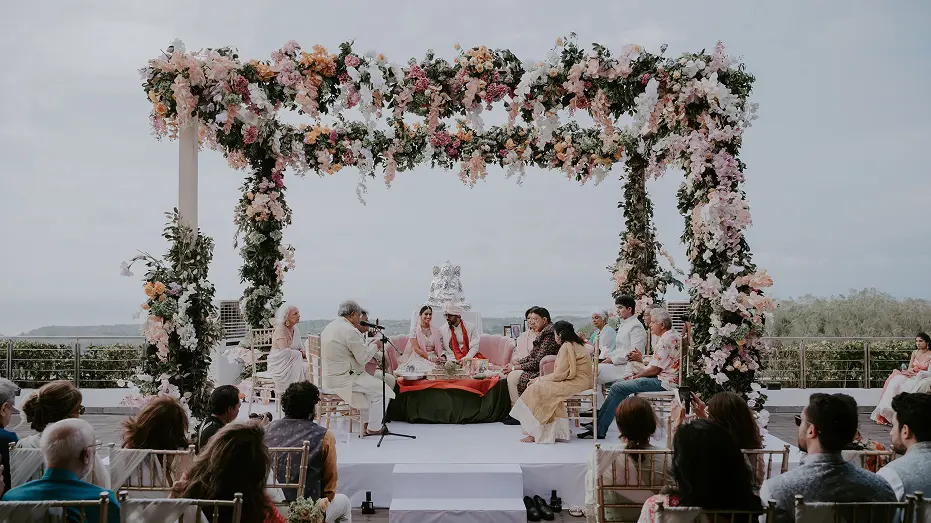
Indian weddings in Bali carry a visual language of their own. The rituals stay rooted in tradition, but the setting changes everything about how that tradition looks and feels. Open-air pavilions, tropical light, and Balinese craftsmanship give families new ways to bring their decor vision to life. Often, these elements come together in ways a hometown venue never could.
What Makes Indian Weddings in Bali Visually Different
Most Indian weddings in Bali unfold outdoors, or in spaces built to feel that way. Natural light changes the entire mood of a mandap, a stage, or a floral installation throughout the day. Morning ceremonies often glow with soft, filtered sunlight. By evening, the same setting can feel dramatic under string lights and torches.
Local materials also give decor teams new textures to work with. Bamboo structures, handwoven textiles, and carved wooden panels are easy to source in Bali. Many of these materials are hard to find, or far more costly, back home.
This is part of why so many families choose Bali in the first place. The Grand Plan EO has spent years learning how Indian decor traditions translate into a tropical setting without losing their meaning along the way.
Indian Wedding Decorations to Plan for a Bali Celebration
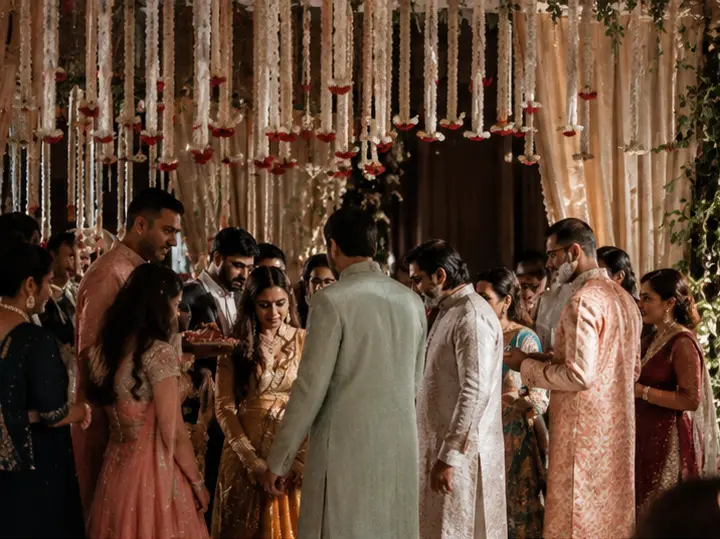
Every Indian wedding in Bali needs a handful of core decor elements planned well in advance. Getting these right early makes every ceremony that follows easier to design around.
- Mandap design. The ceremonial structure where the couple takes their vows, often built with floral canopies, drapery, or carved wooden frames.
- Floral installations. Garlands, backdrops, and table centerpieces that carry both color and cultural meaning.
- Lighting design. Warm string lights, lanterns, or uplighting that shift the mood from daytime ceremonies to evening celebrations.
- Color palette. A consistent scheme across every event, often tied to the ceremony type and family preference.
- Seating and stage layout. Arrangements that support both viewing and movement, especially for larger multi-day guest lists.
- Signage and welcome details. Small touches, like welcome boards or aisle markers, that carry the same decor theme from the entrance onward.
These elements form the foundation for the entire celebration. From there, decor choices shift depending on which ceremony is being planned.
Mandap and Floral Styling for Every Ceremony
Indian wedding decorations rarely look the same from one event to the next. Each ceremony carries its own mood, so the decor should shift along with it.
Decor for Mehndi and Sangeet Nights
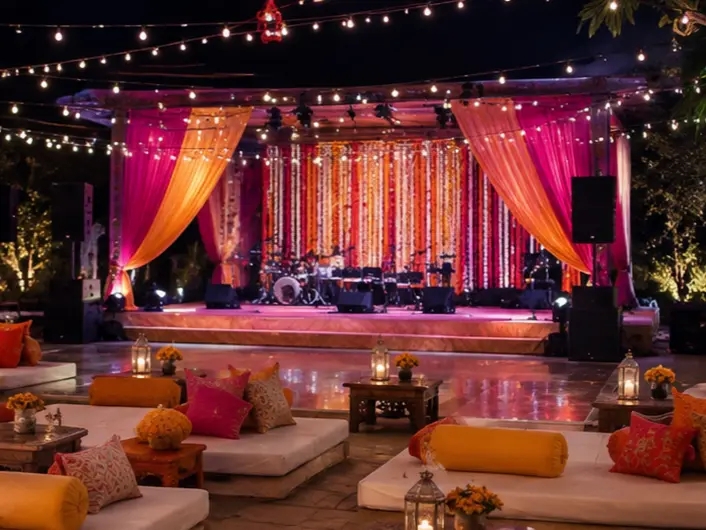
Pre-wedding events call for a livelier, more relaxed decor approach. These nights are about celebration, not solemnity, so the styling reflects that energy.
- Bright, festive color palettes with marigold and jasmine décor woven through backdrops and seating areas
- Low floor seating with floral cushions for a casual, social atmosphere
- String lights and lanterns for a warm evening glow
- Open stage areas or dance floors built for performances and music
Decor for the Wedding Day and Pheras
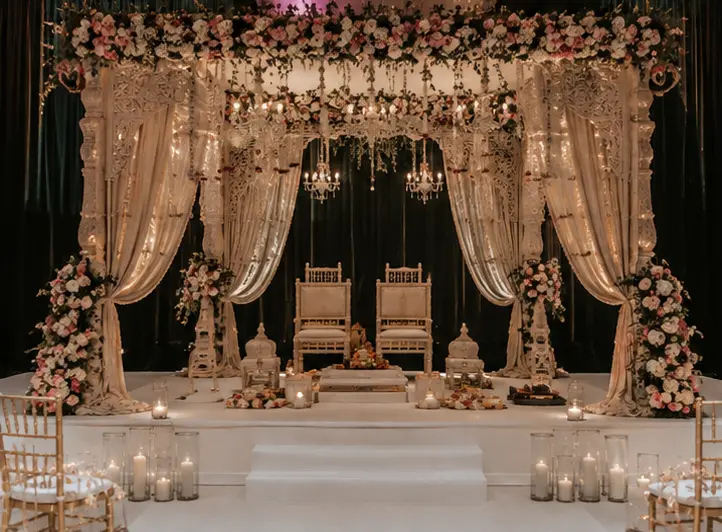
The main ceremony calls for a more formal, symbolic decor style. Every element here tends to carry deeper meaning than the nights before it.
- A floral mandap design built around the couple’s chosen colors and regional traditions
- Traditional Indian wedding colors, such as red, gold, and deep orange, layered through drapery and florals
- Fresh flowers for Indian wedding rituals, chosen for both fragrance and symbolism
- Balinese-Indian decor fusion elements, like woven palm accents paired with Indian textiles, for a setting that feels rooted in both cultures
Together, these choices turn a single mandap into a series of distinct visual moments. Guests notice the shift from one ceremony to the next, even within the same venue.
How a Wedding Planner Brings Your Decor Vision to Life
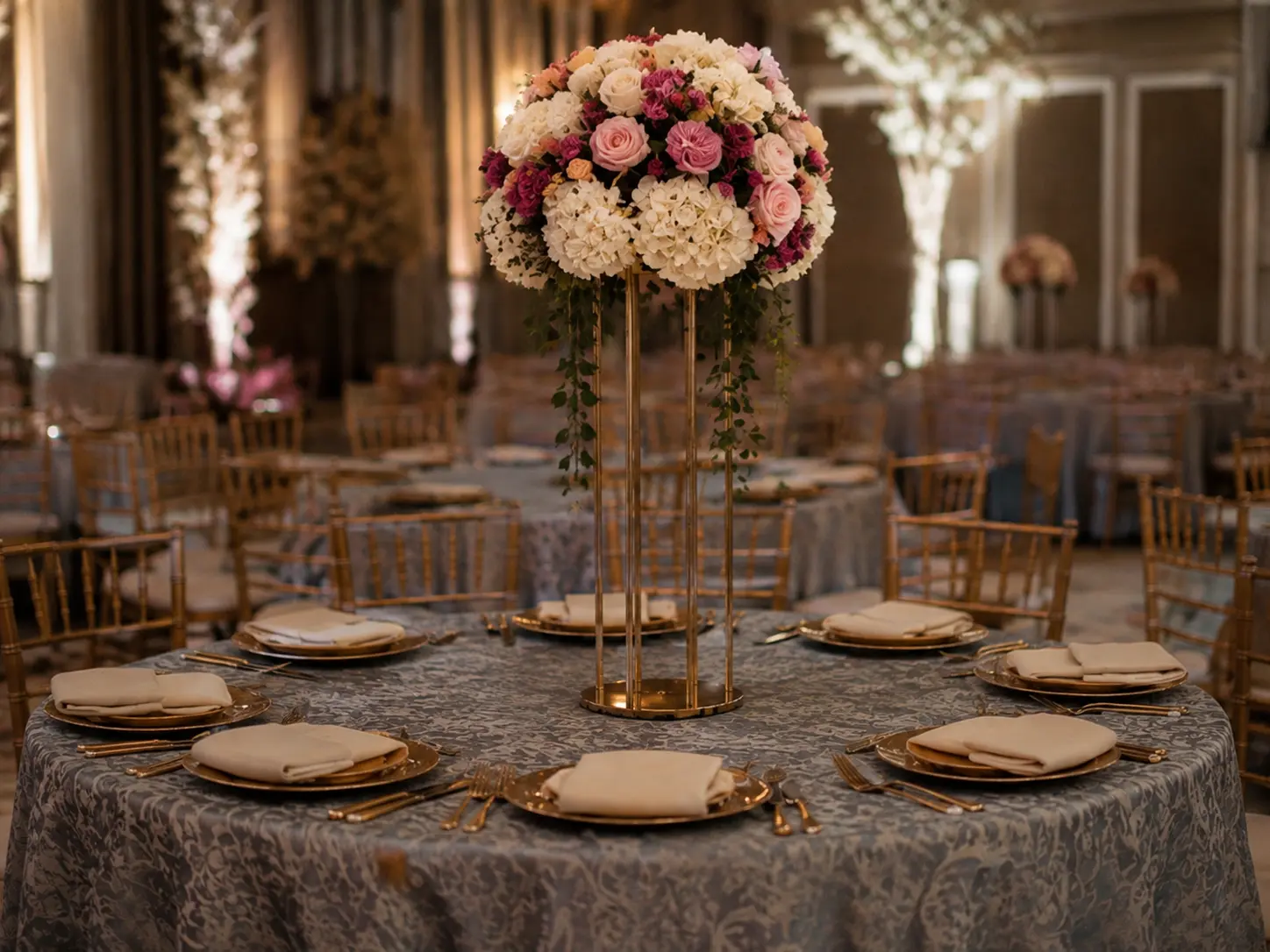
Decor ideas are only the starting point. Turning them into reality takes coordination with florists, fabricators, lighting teams, and venue staff. Often, all of this happens across several ceremonies within just a few days of each other.
This is where what an Indian wedding planner in Bali handles becomes clear. A planner translates a family’s decor references into a working plan. They source the right materials locally, confirm timelines with every vendor, and manage setup and breakdown between events. That coordination means nothing feels rushed, and nothing feels repeated from one celebration to the next.
Working with Bali’s Wedding Planning Services
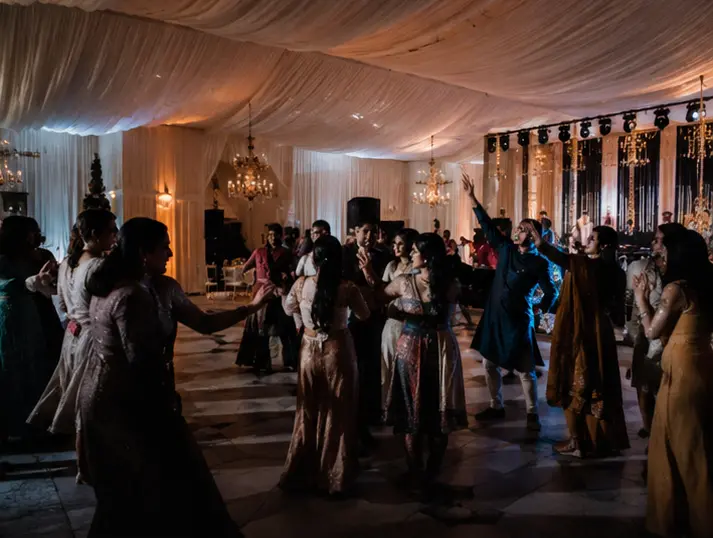
Bringing decor, ritual, and logistics together takes a team that understands all three at once. Exploring Bali wedding planning services is a natural next step once a family has a clearer sense of the look and feel they want.
- Talk to our decor team and share the mandap, florals, or color palette you have in mind.
- Visit our studio in Badung, Bali, to see decor materials and samples in person.
- Follow our Instagram for real decor moments from past Indian weddings in Bali.
For families who want their decor vision built into a flexible plan from the start, browsing custom Bali wedding packages makes it easier to see how style, budget, and logistics fit together. Indian weddings in Bali deserve a setting as thoughtful as the traditions themselves. With the right team, every detail can feel intentional, from the first Mehndi night to the final Vidai.